
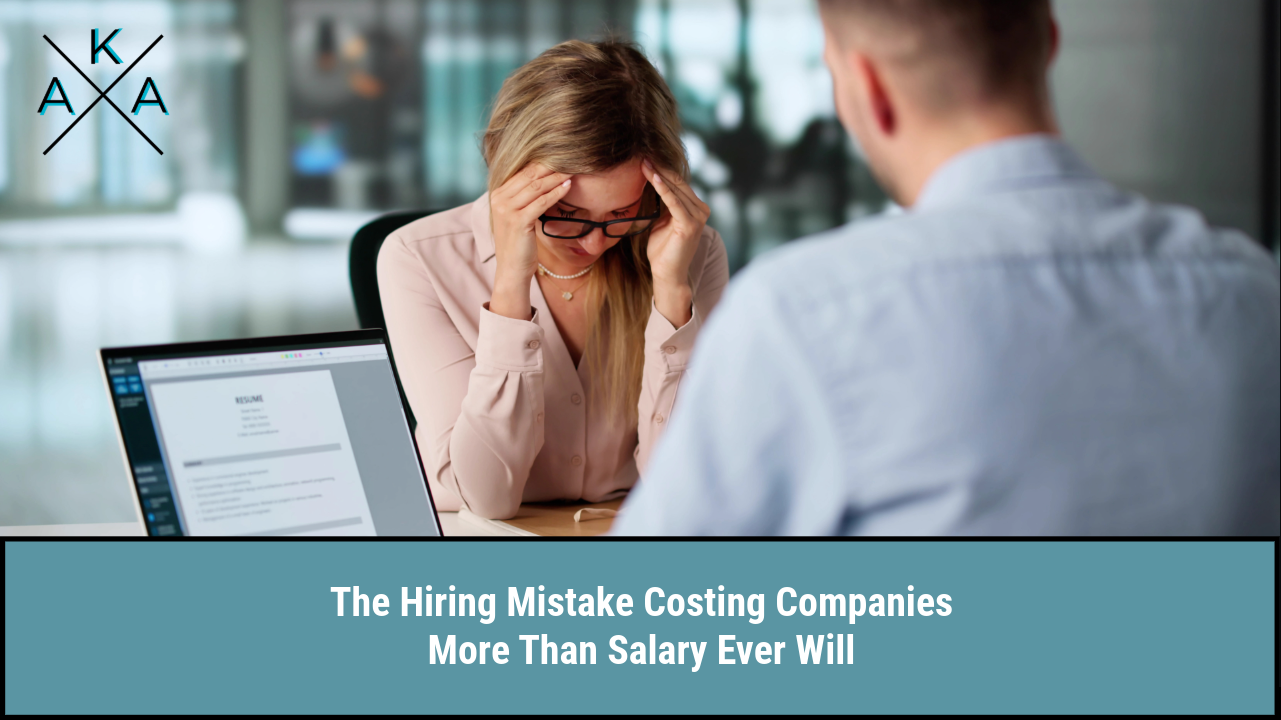
Hiring has a way of humbling you. No matter how many roles you’ve filled, how many teams you’ve built, or how confident you feel going into a decision, there’s always that one hire that makes you stop and think, yeah… I missed something there.
I’ve made that mistake. More than once. And the truth is, it usually wasn’t about salary. Or skills. Or even timing. It was something quieter. Easier to overlook. And way more expensive in the long run.
We focus on resumes when we should be focusing on reality
Most hiring conversations start the same way. We look at experience. We compare backgrounds. We stack resumes next to each other and convince ourselves that the “most qualified” person is the safest bet.
But here’s the thing. A resume only tells you where someone’s been, not how they actually show up when the work gets hard. And work always gets hard.
I once hired someone who looked perfect on paper. Strong background. Solid references. Confident in interviews. We were excited. Everyone was aligned. And three weeks in, she quit.
No drama. No warning. Just gone.
And that one stung. Not because she left, but because when I replayed the process, I realized we never really talked about the day to day reality of the role. The pressure. The pace. The parts that aren’t glamorous.
We sold the upside. We skipped the truth. And that’s on me.
The most expensive hiring mistake is misalignment
People assume bad hires fail because they can’t do the job. Honestly, that’s rare. More often, they fail because the job isn’t what they thought it would be.
Misalignment costs more than salary ever will.
It costs time. Momentum. Team morale. And sometimes your reputation, especially if you’re hiring leaders or client facing roles.
The warning signs are usually there, too. We just ignore them because we want the hire to work.
Things like
- Vague answers when you ask about work style
- Hesitation around accountability or pace
- Over excitement about perks but not process
- A mismatch between how they talk about success and how your team defines it
None of those show up on a resume. But they show up fast once someone starts.
Hiring fast isn’t the problem. Hiring blind is
There’s this idea that hiring quickly is risky. I don’t fully buy that. Some of our best hires came together fast.
The problem isn’t speed. It’s skipping clarity.
When companies rush without being honest about expectations, priorities, and what success actually looks like, that’s when things break.
I’ve learned to slow down just enough to ask the uncomfortable questions. The ones that don’t always feel great in the moment.
Like
- What frustrates you most in a role
- How do you handle unclear direction
- Tell me about a time you wanted to quit and didn’t
- What does a bad week look like for you
Those answers matter more than years of experience.
Why this mistake keeps happening
Here’s the truth. Most companies are hiring while juggling everything else. Growth goals. Client demands. Internal pressure. And hiring ends up being something you squeeze in between meetings.
I get it. I’ve been there.
But when hiring becomes transactional, when it turns into fill the seat and move on, you pay for it later.
Sometimes quietly. Sometimes loudly.
And the cost shows up as
- Constant rehiring
- Burned out managers
- Teams that never quite click
- Leaders who spend more time fixing than building
That cost compounds. Way beyond salary.
What actually changes outcomes
The shift for me came when we stopped treating hiring like a checklist and started treating it like a commitment.
Not just to the role. But to the person. And to the team they’re walking into.
That means being honest. Even when it might scare someone off.
Because the right people lean in when you’re real. The wrong ones opt out early. And that’s a win.
It also means slowing down to define what success really looks like. Not just in the first 30 days, but six months in. A year in. When the novelty wears off.
Funny enough, the more transparent we became, the better our hires stuck. Longer tenure. Better engagement. Fewer surprises.
The hires I remember most
I don’t remember the smooth hires. The easy ones. The ones who fit immediately.
I remember the ones that made me rethink how we hire.
The hire who quit early because no one checked in.
The hire who struggled because expectations changed without warning.
The hire who was capable, but never truly aligned.
Those moments shaped how we do things now.
And I still think about them when we’re hiring today.
Closing thought
The biggest hiring mistake isn’t paying someone too much. It’s hiring someone without setting them up to succeed.
When you get alignment right, salary becomes just one part of the equation. Important, sure. But not the thing that decides whether someone stays, grows, and actually contributes.
And if you’ve made this mistake before, welcome to the club. Most of us have.
The key is learning from it. And doing better next time.