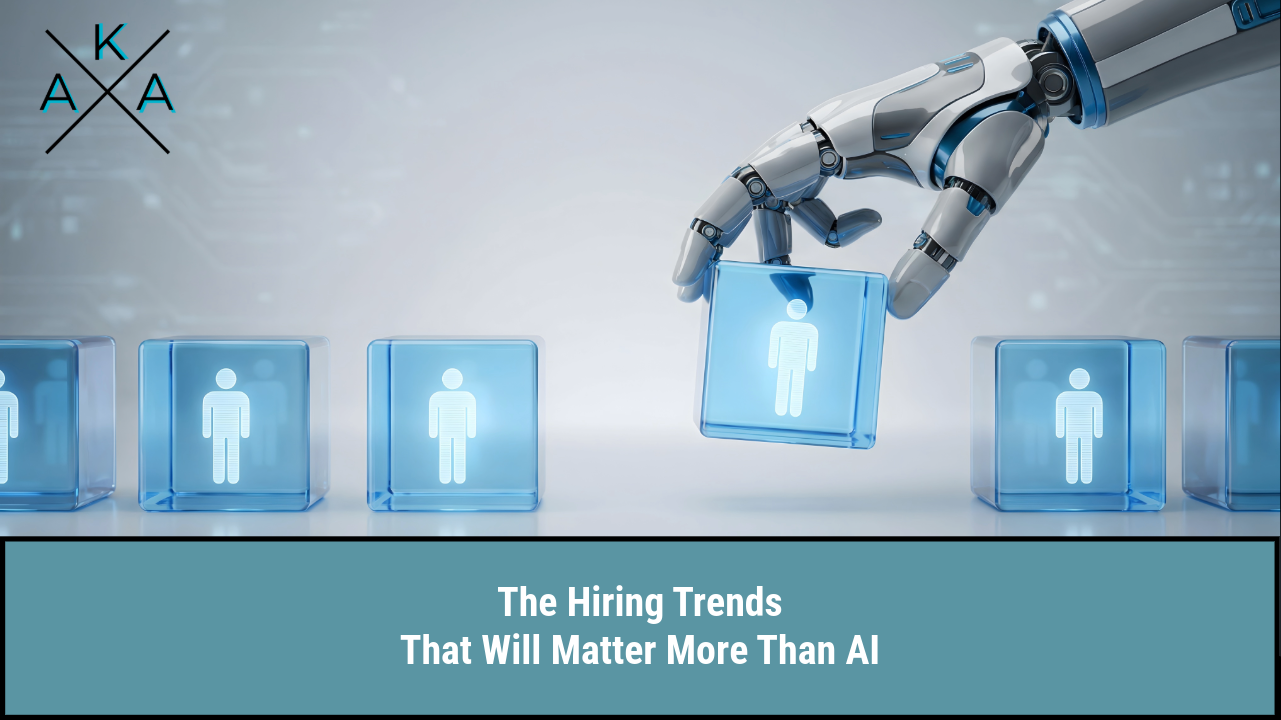
Hiring trends and AI seem to dominate every conversation right now, and honestly… I get it. Every time I open LinkedIn or sit down with another business owner, someone is talking about automation, AI recruiting tools, or how technology is going to change hiring forever.
But here’s the thing. The companies that consistently make great hires aren’t winning because they have the newest software. They’re winning because they’ve figured out the human side of hiring. And after spending years helping companies build teams, I can tell you that’s the part that still matters most.
People still choose people
I’ve watched companies spend thousands on technology, only to lose candidates because someone forgot to return a phone call.
That one stung.
Not because the software didn’t work. Because someone on the team assumed a great candidate would simply wait.
They didn’t.
I still remember talking with a candidate who had two offers on the table. One company had an incredible compensation package. The other just communicated better. They answered questions quickly, followed up when they said they would, and made the candidate feel like they actually mattered.
Guess which offer they accepted.
We like to believe hiring is mostly about compensation, titles, or benefits. Those things matter. But people remember how you made them feel throughout the process. They remember whether someone respected their time.
Technology can help organize that process.
It can’t replace genuine communication.
Speed is becoming a competitive advantage
This is probably the hiring trend I see getting overlooked the most.
Everyone wants top talent.
Almost nobody wants to move fast enough to hire it.
We’ve had searches where an incredible candidate was available on Monday… interviewed by Wednesday… and accepted another offer by Friday.
That’s just the reality now.
The strongest candidates usually aren’t unemployed for very long. They’re interviewing in multiple places, and they’re paying attention to how organized your company is. Every delay sends a message, even if you don’t intend it to.
Sometimes it’s little things.
A calendar invite goes out late.
Someone cancels an interview.
Feedback takes a week.
None of those feel like a huge deal internally.
To the candidate? They start wondering if this is what working there would actually feel like.
And honestly, I can’t blame them.
Skills matter. Adaptability matters more.
Years ago, we’d spend a lot of time trying to find the perfect résumé.
Now?
I’m much more interested in how someone learns.
Markets change.
Technology changes.
Sales processes change.
Entire industries change.
The people who continue producing results are usually the ones who adapt without needing someone to hold their hand every step of the way.
I’ve seen candidates come from industries that had almost nothing in common with the role they accepted… and outperform people who had years of direct experience.
Why?
Because they asked questions.
They stayed curious.
They weren’t afraid to adjust.
Experience absolutely has value. I’m not saying it doesn’t.
But I’ve learned that hiring someone simply because they’ve “always done it that way” can be a bigger risk than bringing in someone who’s hungry to figure it out.
That realization changed how I interview people.
Culture isn’t free lunches or ping-pong tables
This word gets thrown around a lot.
Culture.
Sometimes I think we’ve made it more complicated than it needs to be.
Culture is really what happens after the interview.
It’s how managers communicate.
It’s whether new employees know what success actually looks like.
It’s whether someone checks in during week one… instead of assuming everything is fine.
I once watched a great hire leave during the first month because nobody took ownership of onboarding. Everyone assumed someone else was helping.
No one was.
The employee didn’t leave because they couldn’t do the job.
They left because they didn’t feel connected.
It made me rethink how much attention we give to recruiting compared to retention.
We celebrate accepting the offer.
The real work starts after that.
Some of the companies I enjoy working with most have a few things in common:
- They communicate clearly.
- They move with purpose.
- They coach instead of criticize.
- They make people feel like part of the team early.
- They treat hiring as the beginning of a relationship, not the finish line.
Funny enough… none of those require AI.
AI is a tool. Your people are still the advantage.
Don’t get me wrong. I think AI is going to make recruiting better in a lot of ways.
We’ll automate repetitive tasks.
We’ll organize information faster.
We’ll probably eliminate plenty of busy work that nobody enjoys anyway.
I’m excited about that.
But every major hiring decision I’ve watched succeed came down to trust.
Someone believed in a candidate.
A candidate believed in a company.
That’s still built through conversations, honesty, consistency, and leadership.
Technology can make those conversations happen more efficiently.
It can’t have them for you.
And maybe that’s the biggest hiring trend of all.
The companies that continue attracting exceptional people won’t simply be the ones using AI. They’ll be the ones using AI while doubling down on everything that makes hiring human.
That’s the part I don’t see changing anytime soon. And honestly… I hope it never does.