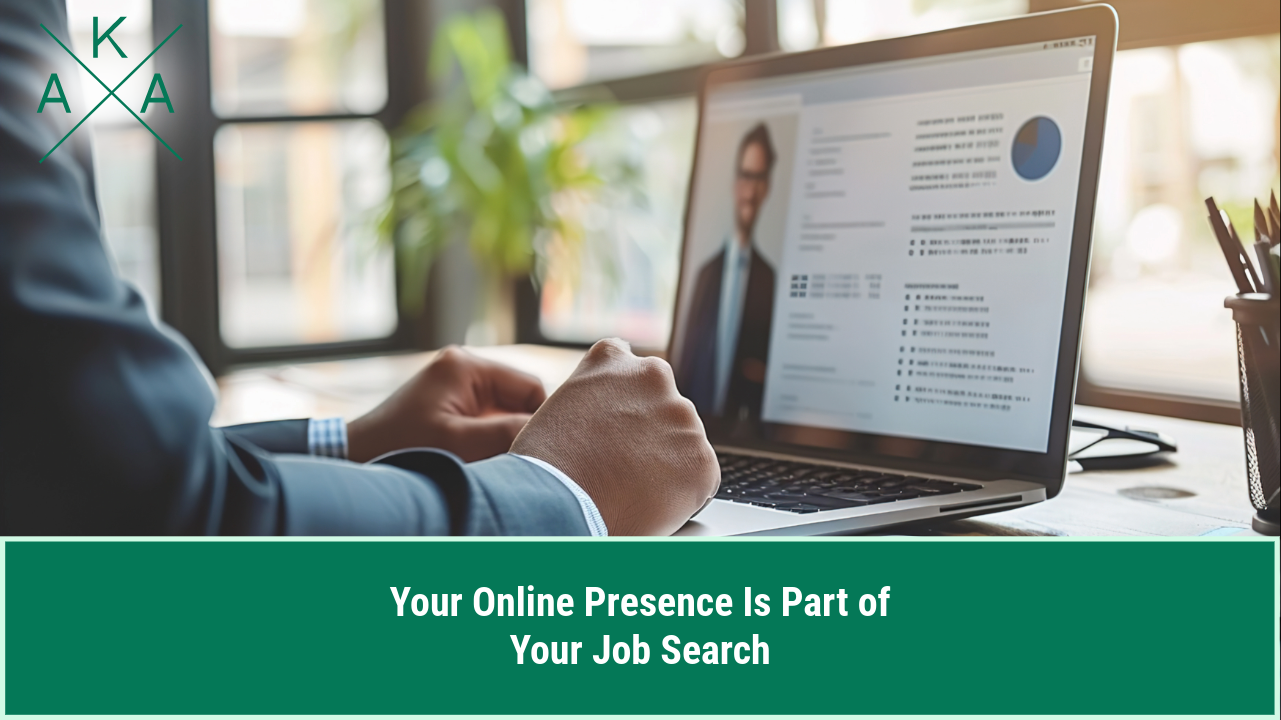
Your online presence is part of your job search, whether you’re actively applying for positions or just keeping an eye out for something better. I’ve noticed that people spend hours updating their resumes, preparing for interviews, and researching companies, but sometimes forget about the information that’s already available about them online. And these days, that information can become part of someone’s first impression before a conversation even happens.
I don’t think you need to be posting on LinkedIn every day or building some elaborate personal brand to get noticed. Most professionals are busy enough as it is. But I do think it’s worth understanding what employers and recruiters might see when they look you up. Because your professional story doesn’t necessarily begin when you send someone your resume anymore.
Your First Impression Might Happen Before You Meet Anyone
I remember when preparing for a job search mostly meant updating your resume, finding references, and making sure you had something decent to wear to an interview.
Those things still matter, of course.
But now there’s another step that happens, sometimes without you even realizing it.
Someone receives your resume, gets curious about your background, and searches your name online.
Maybe they find your LinkedIn profile. Maybe they see an article you contributed to, a professional organization you’re involved with, or an old company biography.
And sometimes, they don’t find much at all.
None of those things automatically determine whether someone is qualified for a position. I think that’s important to say.
A person can be excellent at their job and have almost no online presence. I’ve spoken with plenty of professionals who spend their days managing people, solving problems, and delivering results but rarely think about updating a social media profile.
They’re busy working.
I get that.
Still, when your online information is available, it can help someone understand your background before they reach out.
Think about a recruiter looking for someone with experience managing operations across several locations. They come across two professionals with similar job titles. One profile only lists a company name and employment dates. The other explains the responsibilities they’ve handled, the industries they’ve worked in, and the types of projects they’ve supported.
Neither profile tells the whole story.
But one gives the recruiter more information to work with.
And sometimes, that little bit of context is enough to start a conversation.
LinkedIn Doesn’t Need to Be Perfect, Just Useful
I think LinkedIn has become one of those things people know they should update but keep putting off.
It’s right up there with organizing old files or finally cleaning out your email inbox.
You tell yourself you’ll get to it.
Then six months go by.
The funny thing is, updating your profile doesn’t have to turn into a weekend project.
Start with the basics.
Does your current position reflect what you’re actually doing? Are your previous roles listed correctly? Can someone understand the kind of work you’ve been responsible for without having to guess?
I’ve seen profiles where someone was promoted twice, took on additional responsibilities, and helped manage major business changes, but their profile still showed the position they held three years earlier.
That creates a pretty incomplete picture.
And if you’re hoping to explore opportunities that involve more responsibility, you want your professional background to reflect the work you’ve already been doing.
A few things I encourage professionals to review include:
- Your headline: Does it explain your professional focus, or does it only repeat your current job title?
- Your experience: Have you included the responsibilities, projects, and accomplishments that help explain your background?
- Your skills: Are they relevant to the type of work you’re doing now or interested in pursuing?
- Your employment history: Are your dates, company names, and positions accurate and consistent with your resume?
- Your contact information and visibility settings: Can the people you want to hear from actually reach you?
Nothing complicated.
And you don’t need to turn every responsibility into some impressive accomplishment.
Sometimes a straightforward explanation of what you do is more helpful than a paragraph full of business terminology.
I also think it’s perfectly fine if you don’t post regularly.
Not everyone enjoys sharing professional updates, commenting on industry discussions, or writing articles.
Your profile can still be useful without becoming another full-time responsibility.
The goal isn’t to look like you’re constantly networking.
It’s to make it easier for someone to understand your professional experience.
What You Share Online Can Add Context, but It Isn’t the Whole Story
This is where the conversation gets a little more personal.
Most of us use social media for reasons that have absolutely nothing to do with work.
Family photos, vacations, hobbies, funny videos, weekend plans. Normal life.
And I don’t think professionals should feel like every part of their personal lives needs to revolve around their careers.
You should be able to have interests outside the office.
But I do think it’s worth occasionally looking at what information you’ve made publicly available.
Not because you need to create a perfect image.
Nobody has one.
It’s more about understanding how your public information might be interpreted by someone who doesn’t know you.
A comment that made sense in a conversation with friends might look different when someone reads it without context. An old public profile might contain information you haven’t thought about in years. And a post from a previous stage of your life may no longer reflect who you are today.
I’ve had conversations with candidates who were surprised to learn how much information about them was publicly accessible.
Nothing particularly concerning, just things they’d forgotten were there.
That made me think about how easy it is to lose track of our digital footprint.
We create accounts, change jobs, move to new cities, and go through different stages of life. Meanwhile, old information can remain online.
So every now and then, I think it’s reasonable to search your own name.
See what appears.
Check your privacy settings. Look at old public profiles. Make sure your professional information is accurate.
And remember, not everything that appears in a search result is necessarily current or correct.
Employers and recruiters have a responsibility to evaluate candidates fairly and focus on information relevant to the position. Personal social media activity isn’t a reliable substitute for understanding someone’s qualifications, experience, or ability to do a job.
I think both sides benefit from remembering that.
Your Online Presence Can Create Opportunities Before You Start Looking
One of the more interesting things about recruiting is how often career conversations begin with people who aren’t actively searching for another job.
They’re working. They’re comfortable. Maybe they’re even happy where they are.
But that doesn’t mean they would never consider a different opportunity.
Sometimes a recruiter comes across a professional’s background and notices experience that aligns with a position they’re working on.
Maybe it’s industry knowledge. Maybe it’s leadership experience. Or maybe the person has worked through a business challenge that’s similar to what another company is facing.
That initial connection can lead to a conversation.
And sometimes, that’s all it is.
A conversation.
I think people occasionally assume that speaking with a recruiter means they’re committing to leaving their current employer.
It doesn’t.
You can learn about the market, ask questions about a position, and better understand what opportunities exist without making an immediate career decision.
That’s one reason I encourage professionals to think about their online presence even when they aren’t actively applying for jobs.
You never really know when an opportunity might become relevant.
And here’s another thing worth mentioning.
Your professional network matters too.
Staying connected with former colleagues, managers, clients, and people you’ve worked with over the years can create opportunities that aren’t necessarily connected to a public job posting.
You don’t need to message everyone every month.
But maintaining those relationships can be valuable.
I’ve always found it interesting how often someone learns about a position through a conversation that had nothing to do with job searching in the first place.
A former colleague reaches out. Someone remembers a project you worked on together. A recruiter asks whether you’d be open to hearing about a role.
Small interactions.
But sometimes they lead somewhere.
And that’s really the point.
Your online presence doesn’t have to do all the work for you. It simply gives people another way to learn about your background and connect when something relevant comes along.
Of course, a profile alone won’t get you hired.
You still need the experience, communication, and qualifications that match what an employer is looking for.
But when your professional information is clear and current, it can make those first conversations easier.
Conclusion
I don’t think anyone needs to spend every day worrying about how they appear online. Most of us have enough going on already. But I do believe it’s worth giving your professional presence a little attention now and then, especially when your career has changed or you’re starting to think about what comes next. Your resume tells part of your story, your conversations tell another, and your online presence can help connect the two. You never know who might come across your background or when a simple connection could turn into an opportunity worth exploring.